Why We Use Categories?
Jew-hatred is everywhere.
It crosses borders, platforms, institutions, and cultures. It appears online and offline, in media, politics, academia, and everyday life.
Because the challenge is global, our response must be global too. And that’s exactly why we can’t fight it with hundreds of disconnected projects running in parallel, each working in isolation.
To be effective—and scalable—we need structure.
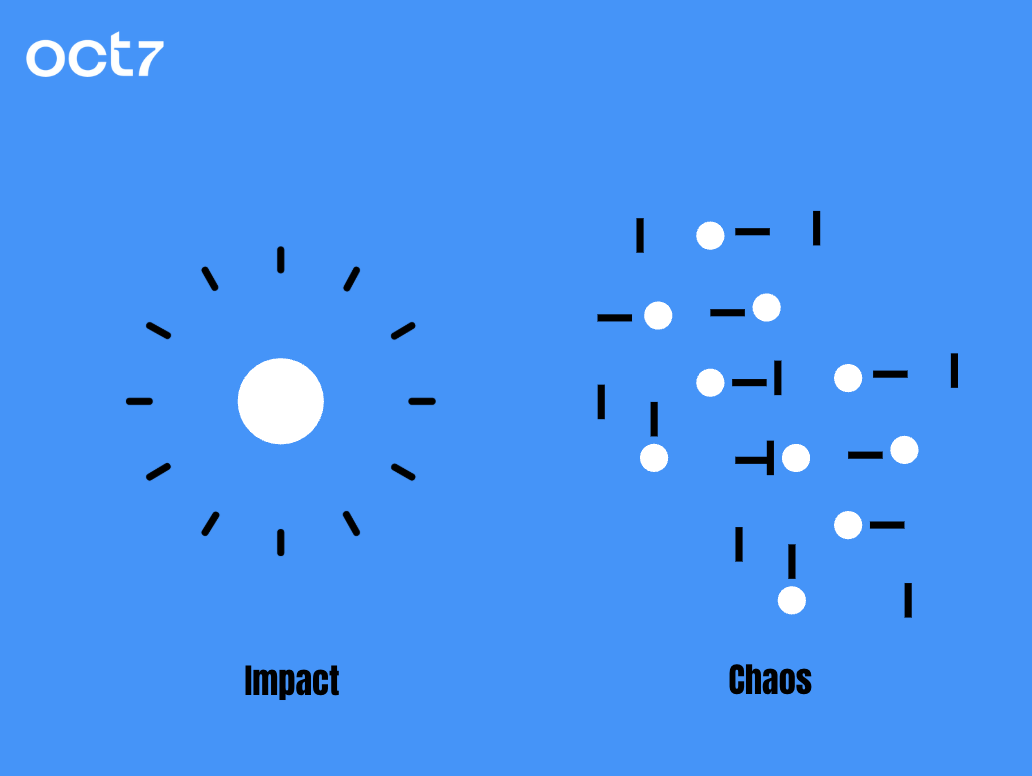
From Chaos to Clarity
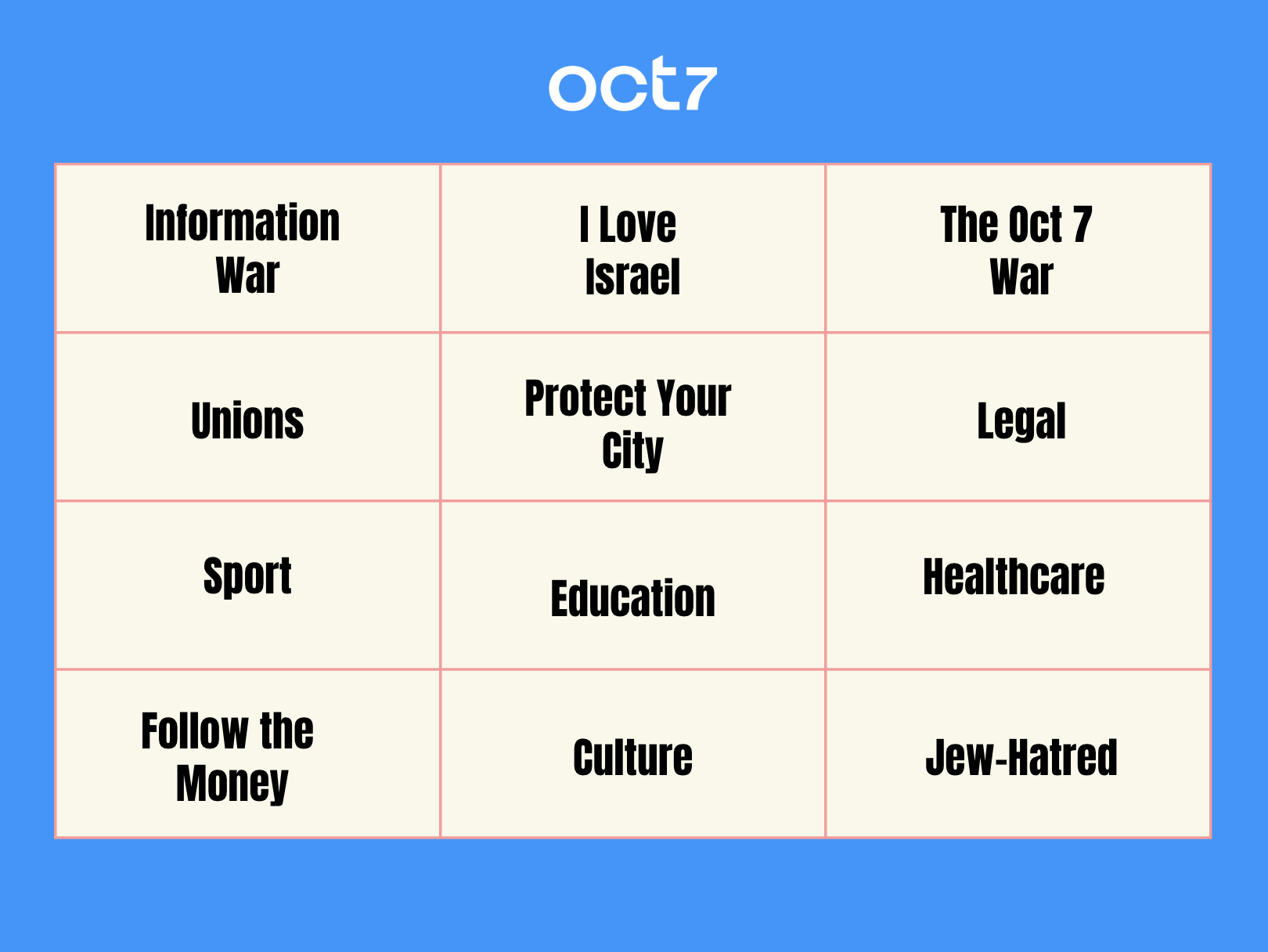
We organize our work through 12 clear categories, each with defined sub-categories. This framework allows us to zoom in on specific problems without losing sight of the bigger picture.
Categories create structure.
Sub-categories make the work practical.
For example:
Wikipedia, SEO, Media, and Social Media all fall under the Information War category.
Allies, Jerusalem, and Volunteers belong to I Love Israel.
This isn’t about putting things into boxes for the sake of order. It’s about creating a shared map that reflects how the work actually happens.
A Shared Language for a Global Challenge
The category system allows organizations in different countries—often operating in very different political, cultural, or legal environments—to recognize that they are facing the same challenges.
When everyone uses the same framework:
Priorities become clearer
Overlap becomes visible
Collaboration becomes natural
Instead of duplicating efforts, organizations can build on one another’s work. Instead of competing for attention or resources, they can coordinate and amplify impact.
Where Top-Down Meets Bottom-Up
One of the most powerful outcomes of this framework is that it creates common ground between:
Grassroots volunteers
Local initiatives
NGOs
Influencers
Institutions
Bottom-up energy and top-down strategy don’t compete here—they meet inside the same structure. Everyone knows where they fit, what they’re contributing to, and how their work connects to others.
Making Participation Intuitive
For volunteers, categories make engagement simple and intuitive.
People don’t need to understand the entire ecosystem to get started. They can immediately see where their skills, energy, and values belong—and choose how they want to contribute.
For organizations, the framework enables collaboration instead of fragmentation. It becomes easier to find partners, align efforts, and build together rather than starting from scratch.
One Platform, Collective Impact
Most importantly, this structure allows us to build one platform that is relevant to every organization on our side.
It’s flexible enough to support different missions, methods, and audiences—yet unified enough to create real collective impact.
This is how local actions scale into global momentum.
Not Theory—Practice
This framework wasn’t designed in a vacuum.
It was built over two years of hands-on work, running more than 200 groups and speaking with hundreds of activists, organizations, and influencers.
It doesn’t describe how things should work.
It describes how things actually work right now.
What Can You Do With This?
Use the categories to filter out the noise.
Decide where your focus is.
When your work is clearly placed within a category, it becomes dramatically easier for others to:
Find you
Join you
Work with you
Clarity creates collaboration.
And collaboration creates impact.